Welcome Address
Keynote Address

Bharat Lal, IFS
Secretary General & CEO, National Human Rights Commission (NHRC), New Delhi
Bharat Lal, IFS, a former civil servant with over three and a half decades of distinguished public service, currently serves as the Secretary General and CEO of the National Human Rights Commission (NHRC) of India. His career has been marked by pioneering initiatives in good governance, human rights, public service delivery, environmental conservation, and sustainable development—making impactful contributions towards improving quality of life, upholding dignity, and protecting the rights of marginalized and vulnerable communities, including women and tribal populations.
Before assuming his role at the NHRC in July 2023, he served as the Director General of the National Centre for Good Governance (NCGG), the Government of India’s apex institution for public policy and governance. Prior to that, as Secretary to the Lokpal of India, he contributed to strengthening the country’s anti-corruption frameworks. His tenure as the founding Mission Director of the Jal Jeevan Mission was transformative—enabling access to clean tap water for over 194 million rural households, schools, and day-care centres (AWCs); empowering local communities; advancing women’s leadership in water and sanitation; and supporting the development of local public water utilities. He has also served as Additional Secretary to the then President of India.
His visionary approach is evident in initiatives such as the Chiranjeevi Yojana, Van Bandhu Kalyan Yojana, and Eklavya Model Residential Schools. In the aftermath of the 2001 Gujarat earthquake, he played a key role in establishing the Water and Sanitation Management Organisation (WASMO)—an internationally acclaimed initiative that empowered communities, especially women, to manage local water supply systems.
As a key member of the national COVID-19 pandemic management team, he made meaningful contributions to saving lives and protecting livelihoods.
Known for his ‘out-of-the-box’ thinking and forward-looking solutions, he has consistently championed good governance, digital transformation, and public grievance redressal. His deep commitment to safeguarding human rights and fostering equitable socio-economic development positions him as a transformative leader dedicated to building a just and inclusive society.
Panel 1 – Transformative Policy Approaches for Strengthening Institutional Capacity
Moderator: Subha Muthu Kumar, Senior Lead — IIHS Capacity Development
As institutions confront increasingly complex development challenges, strategic policy initiatives have become vital to accelerate SDG progress. Innovation in digital governance, public health, water and sanitation, transport, and infrastructure financing are reshaping how institutions approach equity, sustainability, and service delivery. These efforts reflect a broader institutional development shift from administrative reform to strategic, adaptive capacity-development.
This panel brings together leaders from diverse sectors to explore how investments in human development, digital ecosystems, research, and cross-sectoral partnerships are enhancing institutional agility and evidence-informed policymaking, while enabling sustainability and equity. The discussion will highlight models that enable scalable, context-sensitive governance while addressing persistent barriers such as fragmented coordination, uneven access to innovation, and capacity gaps.
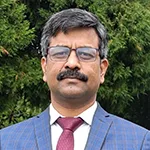 Pradeep Singh, IFS
Director, Jal Jeevan Mission
Pradeep Singh, IFS, is an alumnus of IIT Mumbai, holding a B.Tech and M.Tech in Mechanical Engineering with a specialisation in Computer Aided Design and Automation (CADA). He joined the civil services in 2005.
He has served in remote and tribal districts of Gujarat, working on a range of issues including livelihoods, watershed management, mitigation of human-wildlife conflict, and the conservation of grassland ecosystems in partnership with rural communities. He has consistently applied advanced technologies to address real-life challenges on the ground.
He also served as Deputy Secretary in the Climate Change Department of Gujarat, where he contributed to the development of the State Action Plan on Climate Change. As Project Director and Chief Administrative Officer at WASMO, Gujarat, he worked closely with communities to ensure reliable water supply in villages.
He received the National Award for e-Governance 2023, conferred by the Department of Administrative Reforms and Public Grievances (DARPG), Government of India, for his application of emerging technologies in citizen-centric services. He developed the Water Quality Management Information System (WQMIS), through which data on water quality testing is reported annually by over 600,000 villages, enabling timely monitoring and remedial action.
He is currently serving as Director in the Jal Jeevan Mission, where he is working with States to leverage technology for effective water service delivery to households.
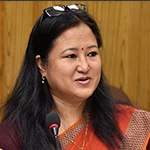 Susheela Devi Negi
Associate Head, S&T Capacity Building Division
Ministry of Science and Technology
Government of India
Susheela Negi, Associate Head, S&T Capacity Building Division at the Ministry of Science and Technology, Government of India, is a distinguished leader in STEM empowerment and climate research. She leads the Women in STEM (WISE-KIRAN) programme, driving transformative policies, funding initiatives, and mentorship programmes to bridge gender gaps in science and research. Through her dedicated efforts, she contributes to building a more inclusive, innovative, and resilient scientific ecosystem in India.
Prior to this role, she led two critical National Missions on Climate Change under the National Action Plan on Climate Change. With nearly two decades of experience, she has shaped and executed groundbreaking research programmes and cross-sectoral technology collaborations, engaging socio-economic ministries, industries, and youth initiatives in climate science, CO₂ sequestration, and national capacity building.
Demonstrating her commitment to interdisciplinary research, she was instrumental in establishing a Centre of Excellence in Climate Change Research in India, recognising the power of collective scientific efforts.
She has represented India in various international forums and delegations, leading a team of 30 scientists across six government departments to Japan. She has also been nominated for advanced training and leadership programmes in Taiwan, the UK, Japan, and Russia. As a key representative of the Government of India, she has played a significant role in shaping global discourse at major international events across Taiwan, the UK, Japan, Egypt, Dubai, and Russia.
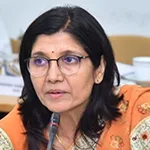
Swati Sethi
Director, IT & TT, Directorate General of Training,
Ministry of Skill Development and Entrepreneurship, New Delhi
Swati Sethi has been involved in the planning and implementation of central projects focused on upgrading government Industrial Training Institutes (ITIs) across the country, as well as advancing hi-tech training under the Advanced Vocational Training Scheme (AVTS) in central institutes under the Directorate General of Training (DGT), Ministry of Skill Development and Entrepreneurship (MSDE). Several of these projects have been implemented with assistance from the World Bank.
She has also served as Regional Director of the Regional Directorate of Skill Development and Entrepreneurship (RDSDE) for Delhi NCR, Haryana, Punjab, Himachal Pradesh (additional charge), and the Union Territory of Chandigarh during various periods over the last five years. In these roles, she worked closely with respective State Directorates to implement vocational training through ITIs, facilitate Apprenticeship Training through establishments, and oversee the implementation of central schemes such as the National Apprenticeship Promotion Scheme (NAPS). The RDSDEs are also responsible for directly monitoring the engagement of apprentices in central public sector undertakings and central government establishments within the States.
She has recently taken charge as Director (TT & IT) at DGT Headquarters, MSDE.
Panel 2 – Leveraging Financial Resources to drive Institutional Capacity Development
Moderator: Manish Dubey, Chief — IIHS Practice
As infrastructure needs expand across transport, water, energy, housing, and digital connectivity, public institutions are under mounting pressure to deliver at scale—despite limited fiscal space and growing complexity. Traditional financing approaches often fall short of supporting sustainable, long-term infrastructure development. In this evolving landscape, financial innovation is not just about mobilising funds, but about developing the institutional capacity required for effective planning, implementation, and governance.
This panel will examine how institutions are adopting adaptive financing mechanisms such as pooled funds, municipal bonds, blended finance, outcome-based models, and state-level investment boards. It will explore how these tools are being used to strengthen fiscal management, foster inter-agency coordination, and unlock private sector co-investment. Through real-world examples, the session will highlight how aligning financial strategy with institutional design can improve infrastructure delivery and build resilient, future-ready public institutions.
 M. Birathiviraj, IAS
Deputy Commissioner (Revenue & Finance), Greater Chennai Corporation
M. Birathivira, IAS, has been serving as Deputy Commissioner (Revenue & Finance) of the Greater Chennai Corporation since October 2024. In this role, he is responsible for overseeing the Corporation’s financial strategy, driving revenue augmentation, and facilitating innovative financing mechanisms for the Corporation. In addition, he is also in charge of key subjects such as Elections, Land and Estate, and Geo-Spatial Information Systems.
During his tenure, Chennai Corporation launched the State’s first municipal bond under the new SEBI framework on the National Stock Exchange. The bond received exceptional reception in the capital market, with an oversubscription of four times at a competitive coupon rate.
He began his career as Assistant Collector (Trainee) in Thoothukudi District, and then served as Sub-Collector of the Sivakasi Subdivision in Virudhunagar District. He also served as Additional Collector (DRDA) in Nagapattinam. Subsequently, he held the position of Deputy Secretary (Finance) and played a pivotal role in fiscal and budgetary policy decisions.
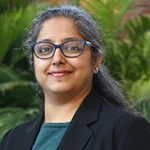 Neha Khanna
Associate Director at Climate Policy Initiative
Neha Khanna is an Associate Director at Climate Policy Initiative (CPI),Delhi, India, where she leads the green and sustainable finance practice.
She is an expert in green and sustainable finance with nearly 15 years of experience in financial advisory and risk consulting, having worked with multinational corporations, banks, development finance institutions, foundations, and multilateral organisations across India, Bhutan, Sri Lanka, Kenya, Tanzania, and the United States. Her areas of expertise include financial risk management, strategy consulting, development consulting, financial inclusion, and climate-related financial risk, with a particular focus on banking, capital markets, and insurance.
Her research interests span climate finance, green finance, sustainable finance, financial inclusion, and gender-lens investing. She regularly delivers lectures and training programmes on green finance and climate-related financial risks and opportunities for professionals in both the private and public financial sectors.
She is a member of the Sustainability and Climate Risk (SCR) Task Force of the Global Association of Risk Professionals (GARP), serves on the steering committee of the Greening of Finance by Women (GroW) Network, and is part of the Expert Advisory Group (EAG) for the Financial Institutions Net-Zero (FINZ) Standard under the Science Based Targets initiative (SBTi).
She holds an undergraduate degree in engineering from Jaypee University of Information Technology and a master’s degree in business administration from the Indian Institute of Technology (IIT), Madras.
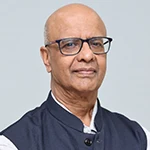
Sashi Krishnan
Director, National Institute of Securities Market
Sashi Krishnan is the Director of the National Institute of Securities Markets (NISM). He brings with him 40 years of experience across the pension fund management, life insurance, and mutual fund industries.
In his previous role, he served as the Chief Executive Officer of the National Pension System Trust from January 2021 to January 2024. Prior to that, he was the CEO of Aditya Birla Sun Life Pension Management Limited. He has also held leadership positions at Aditya Birla Sun Life Insurance Co. Ltd., Bajaj Allianz Life Insurance Company Ltd., DBS Bank (Singapore), DBS Cholamandalam Asset Management Ltd., and the Unit Trust of India.

Sunil KS
Head, ESG Analytical ICRA ESG Ratings Ltd
Sunil KS is a seasoned sustainability professional with over 14 years of experience in ESG, climate change, sustainability, climate risk, and corporate social responsibility. He has a strong background in ESG consulting and strategic planning for organisational sustainability, driving initiatives that deliver meaningful environmental and social impact.
He holds a Master’s degree in Climate Change and Sustainability Studies from the Tata Institute of Social Sciences (TISS), Mumbai, and is a GARP Sustainability and Climate Risk (SCR) certificate holder. At ICRA ESG, he is part of the core team responsible for developing ESG rating methodologies, processes, and policies, and he leads a team of rating analysts.
Prior to his current role, he worked with Tata Consultancy Services (TCS), GIST Impact, HDFC Bank, and several reputed NGOs, where he built his foundational expertise in sustainability.
Panel 3 – Navigating State and Local Government Capacities for Urban Transformation
Moderator: Abhinav M, Consultant, IIHS Capacity Development
India’s urban transformation is unfolding within a complex web of institutional relationships between State governments and Urban Local Bodies. While cities are central to delivering services aligned with the SDGs, such as housing, sanitation, mobility, and climate resilience, they often face structural challenges including fragmented mandates, limited autonomy, and capacity deficits. These gaps constrain the ability of local institutions to plan, scale, and sustain urban development aligned with long-term goals.
This panel will explore how state governments can strengthen urban governance and enable the contextualised implementation of centrally sponsored schemes and SDG targets. It will examine the role of political leadership, intergovernmental transfers, state-local relations and institutional reforms in translating national frameworks into local action. Through case studies and practical insights, the session will highlight strategies to develop municipal capacity, foster institutional learning, and empower city leadership—ensuring that urban institutions are equipped to respond to local needs while advancing broader development priorities.
 Debolina Kundu
Director, National Institute of Urban Affairs
Debolina Kundu, Director of the National Institute of Urban Affairs (NIUA), has over 30 years of professional experience in the field of development studies. She has worked as a consultant with a range of international organisations including the ADB, LSE, IIDS, UNDP, UNFPA, UNESCAP, KfW, GIZ, the Urban Institute (Washington), and the East-West Center (Honolulu). Her work spans issues related to urbanisation, migration, urban development policies, municipal finance, social protection, governance, and exclusion.
At NIUA, she serves as the Country Investigator – India for the GCRF Centre for Sustainable, Healthy and Learning Cities and Neighbourhoods, supported by UK Research and Innovation, and leads several projects supported by UNICEF, the World Bank, and KfW. She is a member of various committees constituted by central and state governments, including the Fifth Delhi Finance Commission.
She has authored numerous articles published in books and academic journals. She recently edited a volume on National Urban Policies (Springer) and is currently working on a Handbook on Urbanisation in the Global South as well as books on urban policies and inequality. She is the Chief Editor of Environment and Urbanisation, Asia (SAGE) and Urban India (NIUA). She also served as Co-Chair of the Task Force on LiFE, Resilience, and Values for Wellbeing under the G20 Think Tank initiative.
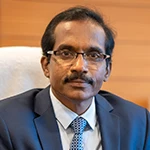
G Mathi Vathanan, IAS
Additional Chief Secretary and Director General of State Administrative Training Academy, Government of Odisha, India.
Mathi Vathanan led the Housing and Urban Development Department of Odisha for over a decade until 2024, steering several flagship urban initiatives focused on inclusive and sustainable development. His leadership was instrumental in advancing universal access to piped water supply, the 24×7 Drink from Tap Mission, the Odisha Liveable Habitat Mission (Jaga Mission), decentralised solid waste and septage management systems, GARIMA—a scheme for the dignity and safety of manual scavengers—and MUKTA, an urban wage employment programme.
Jaga Mission, conceptualised and implemented under his leadership, has received multiple global accolades, including the prestigious World Habitat Award in 2019 and 2023, and the Asia Pacific Housing Forum Innovation Award in 2021.
He also anchored the non-sewered sanitation solution and the Drink from Tap Mission in Odisha, two initiatives that have gained international recognition in the water and sanitation sector.
He serves as a member of the Advisory Board of the International Water Association on Inclusive Urban Sanitation and as an Advisory Committee Member in the Global Advocacy for the Health, Safety and Dignity of Sanitation Workers under the Sustainable Sanitation Alliance.
 Monika Bahl
Deputy Project Director (SUDSC II), GIZ India
Monika Bahl is the Deputy Project Director for Sustainable Urban Development – Smart Cities II (SUDSC II) at Deutsche Gesellschaft für Internationale Zusammenarbeit (GIZ) GmbH, India. She brings over 20 years of diverse professional experience in urban development, capacity development, project management, and governmental advisory roles. She leads the component on capacity building and innovative projects.
She focuses on integrating sustainable practices in urban planning and enhancing data-based decision-making in cities through digital solutions. She has successfully led initiatives such as the State Sanitation Strategy, the revision of the water manual, and managed operations across multiple states. Her expertise extends to developing and implementing capacity development programmes in the fields of data analytics and visualisation, integrated urban planning using GIS tools, climate resilience, and gender-responsive approaches for urban development. Her expertise also includes policy development and implementation, contributing to city development plans and national guidelines, improving urban governance and institutional strengthening for states and cities in India.
 Vikash Chandra
Director, Deloitte
Vikash Chandra is a senior urban infrastructure expert with over 20 years of professional experience. He holds a degree in Architecture (1999), followed by two postgraduate degrees—an MBA from the Indian Institute of Foreign Trade (IIFT), New Delhi, and a Master’s in Architecture (Urban Design) from CEPT University, Ahmedabad.
For the past eight years, he has served as the National Team Leader for the Smart Cities Mission at the Ministry of Housing and Urban Affairs, Government of India. A passionate advocate of the mission, he regards it as the largest urban transformation experiment in India. His areas of interest include public-private partnership (PPP) projects, municipal finance, and urban economics.
He is currently Director at Deloitte India. In previous roles, he served as Project Coordinator for a USD 300 million World Bank-funded programme with the Government of Uttar Pradesh. He also held the position of Assistant Vice President at IL&FS Infrastructure for over a decade, where he led government advisory and transaction projects in aviation, urban development, and tourism infrastructure across India.




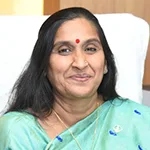 Alka Mittal
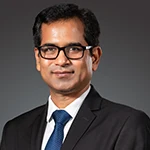 Krishna Kumar Thakur
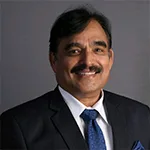 Vinod Kumar Singh
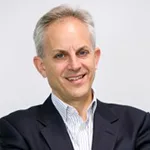 Alexandre Chavarot
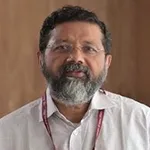 Krishna S Vatsa
 Lauren Rickards
 D Thara, IAS
 Khush Vachhrajani
 Abhishek Punetha
 Vikas Kumar